The Issue
About the Movement to Reimagine Death
American society is experiencing a seismic shift in how we view death. The medical establishment has historically focused on extending every patient’s life for the maximum number of days. But there is an emerging and fundamental recognition that palliative care, a course that focuses on alleviating suffering, is a more compassionate approach.
As America’s Baby Boom generation ages, our country will face dramatic and unprecedented increases in societal death rates. The scourge of the pandemic has made us all too aware of our fragility. The best time to discuss how to experience our waning days is now—rather than when our health declines or angels show up at our doorstep.
But what healthy and vibrant person (especially a young one) wants to talk about death? It’s a persistent taboo. Documentaries on the subject commonly depict dire scenarios—such as reluctant terminations of life-support systems or “point of no return” melancholy with cancer patients. The topic is depicted as controversial and medicalized, often as a polemic.
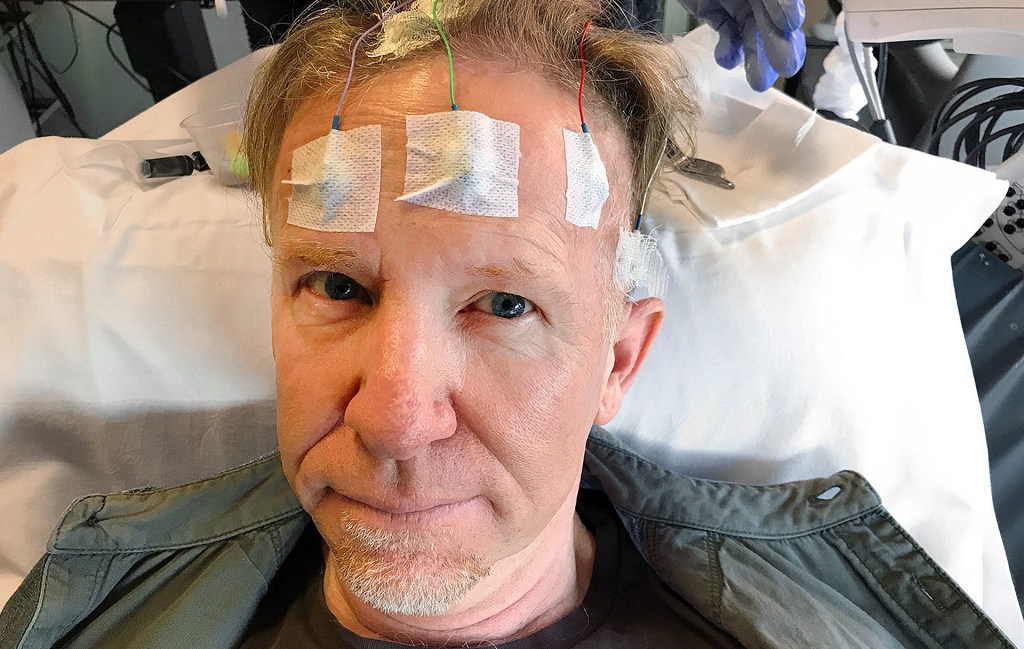
That’s not the case with Jack’s story. His decision-making process took place in slow motion for over 25 years. His complete comfort with the subject (and his cheerful personality) allows general audiences to experience his journey not only as a viewer but as a friend.
You might lean toward an accepting stance about the right to die. Or not. That’s beside the point. Our goal with JACK HAS A PLAN is to engage all audiences with an entertaining, universal story that invites reflection on how each of us wants to live out our final days. Medical aid in dying is integral to the plot, but the film is more concerned about living than dying—especially the need for family and friends to honor the wishes of a loved one going through a life-and-death situation.
That said, Jack’s story underscores these pro-dignity arguments:
- A patient can bring an end to suffering by choosing when to die.
- Patients can die before losing their physical or mental capacities.
- The healthcare financial burden on the family can be reduced.
More than anything, the film captures the ability of somebody like Jack (or you) to arrange for final goodbyes with loved ones—and to maximize our appreciation for a life well lived.
What Insiders Are Saying
“This film is extraordinary; it feels raw, authentic, and powerfully stirring. The film does an outstanding job capturing the complex family dynamics that often arise at the end, and the desire of friends and family to keep their loved one around for longer—the bargaining for time, the idea that you still look ‘fine’ now, the notion that you’re taking yourself away from them. Jack Has a Plan is a gem.”
— Anita Hannig, Author, The Day I Die: The Untold Story of Assisted Dying in America
“Jack Has a Plan is a truly touching movie. Jack reminds us that we are multi-faceted beings and that holistic care is desperately needed especially in chronic serious illnesses. This movie is an excellent teaching tool for hospice and palliative teams, medical students, residents, hospitalists, specialists, and all multidisciplinary teams caring for patients coping with serious illness.”
— Dr. Vanessa Mandal, Greater Sacramento Palliative & Hospice Group
“Jack Has A Plan is a kind, funny, and poignant film. It creates an easy access point for any viewer to better understand the deeply personal issues of an end-of-life experience. Jack’s story sets up a perfect jumping off point for further discussion. End-of-life educators and doulas, palliative care groups, hospice team members, doctors and nurses (including those in training), and anyone committed to patient-centered care will be able to learn and share from Jack’s experience. This documentary also captures the essential questions of Medical Aid in Dying through one man’s experience.”
— Diane Hullet, End-of-Life Educator / Host, “Best Life Best Death” Podcast
“Our brain tumor support group got so much out of this film… Obviously, it was a tricky situation for Jack’s friends to honor his wishes and that complexity was captured on screen. Most of all, the film made us calibrate our priorities for end-of-life scenarios, reaffirmed our gratitude for life and living it fully, and increased our awareness of how our diagnoses and deficits affect loved ones.”
— Beth Kohn, member, UCSF Brain Tumor Support Group
“Highly recommend this compelling film for any field of study having to do with death and dying. That includes educators and professionals in medicine, law, social science, humanities, the arts, theology, philosophy, and helping professions. This powerful documentary offers a rare, intimate view into one man’s self-actualized journey and the people who accompanied him along the way.”
— Rev. Valerie Lovelace, Interfaith Chaplain, Executive Director, Maine Death with Dignity
 Jack Has A Plan